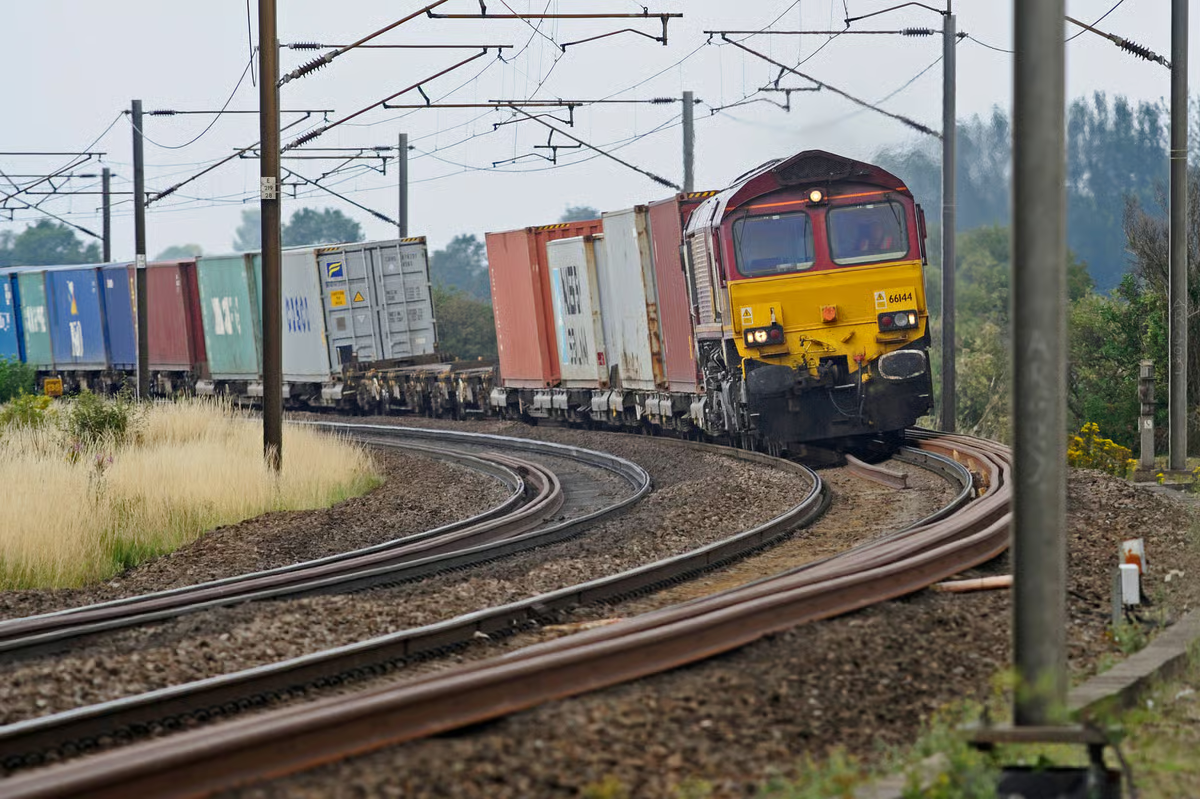
The Severn Valley Railway, spanning 16 miles from Kidderminster to Bridgnorth, is currently the best preserved heritage route in Britain and a working relic of the railway network. The railway attracts visitors with the modern train replicas and various authentic stations and signal systems.
The preservation of the railway was not always certain.
The preserved railway actually spans a much larger portion of the original railway built during the Victorian era that declined and closed during the 20th Century and lost its passenger service in 1963. Within two years of closure, railway enthusiasts got to work to bring the railway back.
The efforts of these enthusiasts turned a dying branch of the railway into a premier example of railway preservation in the United Kingdom.
The Original Severn Valley Railway
The original Severn Valley Railway was constructed in 1862 carrying passengers and goods along the length of the River Severn and serving rural communities. The route was later associated with the Great Western Railway when the railway absorbed the Severn Valley Railway. In 1878, the railway opened a connection from Bewdley to Kidderminster, thereby providing the route today that is preserved.
The line never became a major route in Britain. The line was important in connecting the diverse stations and communities located along the valley.
Passenger traffic declined on the railway, but goods traffic became increasingly important on the line through local industries and agriculture as well as through coal mines in Highley and Alveley.
As the 20th century progressed, the future of passenger services grew increasingly challenging.
Decline and Closure
After the 1948 nationalisation, the route became a part of British Railways.
The countryside line began to face the competition of road transport. With the increase of personal cars and an improvement of both passenger and freight transport, railway transport became less viable.
As a result, passenger numbers started to fall.
As a measure to improve the situation, British rail introduced diesel rail cars. Once again, the issues were structural, and economical services could only be provided in a limited capacity.
Regular passenger services were withdrawn in September of 1963. In fact, that year was particularly notable for Britain as the rail services network went through large scale retractions and consolidations.
With trains taking freight instead of passengers, some of the lines were able to maintain themselves, but the outlook for most of the lines was grim.
While most of the other networks were dismantled, tracks and stations were removed, eventually selling the land for other uses, the Severn Valley Railway could have suffered the same.
The Preservation Movement Begins
In 1965, a railway enthusiast group met in the Coopers Arms in Kidderminster.
Preservation of the part of the line was their goal and developed the Severn Valley Railway Society.
Preserving a railway is measured on an entirely different scale than preserving a piece of railway equipment.
The group had to do a land acquisition, a fundraising campaign, and had to restore a passenger railway with track, stations, and signaling.
Successful negotiations with British railways enabled the preservation of the Bridgnorth to Alveley line of the railway.
Rolling stock and locomotives began to be delivered, all the while volunteers prepared the railway to return to operational status.
Great Western Railway locomotive No. 3205 was one of the early arrivals, reaching the SVR in 1967.
Three years later, the groups efforts were rewarded.
Steam Returns
On May 23, 1970, public passenger trains once again operated on the SVR between Bridgnorth and Hampton Loade.
Although the newly restored section was relatively short when compared to the SVR of today, it proved that preservation could be successful.
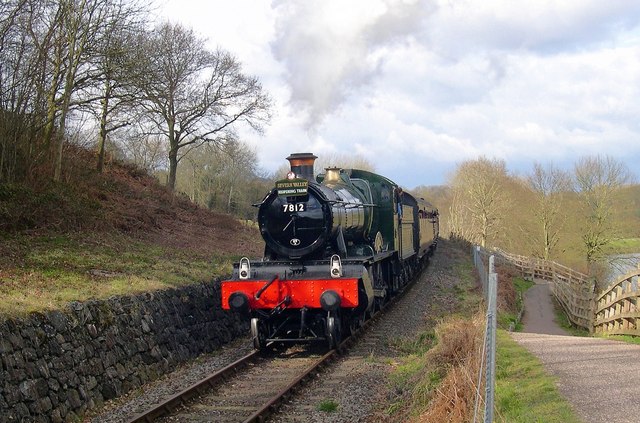
The next step was to expand the SVR.
By 1974, passenger services extended the SVR from Bridgnorth to Bewdley, with the newly preserved Bewdley station (one of the largest undamaged stations on the route) coming under the control of the SVR.
The SVR then focused its efforts and resources on reaching Kidderminster.
This extension was of great importance, for Kidderminster was the only station on the SVR that would continue to have access to mainline rail services, thereby allowing visitors from further afield to more easily access the SVR.
Trains commenced running to Kidderminster in 1984, where the newly built Kidderminster Town station had been located.
The SVR was almost complete; 16 miles of preserved railway connected Kidderminster to Bridgnorth.
A trip on the SVR of today goes well beyond enjoying a ride behind a steam locomotive.
Starting at Kidderminster Town, the preserved railway is located only a short walk from the National Rail station. The preserved railway is a true departure from the Modern world with its Great Western inspired timber structures, mecahnical signalling and rolling stock, and is complete with a farm shop railway station.
Traveling north, trains reach Bewdley, one of the railway’s principal operating locations and most impressive historic stations.
Beyond Bewdley, the railway passes through the Severn Valley’s picturesque countryside. It stops in Arley, Highley, Hampton Loade, and finally Bridgnorth.
Dedicated to displaying historic locomotives and rolling stock that are not in service, The Engine House is located in Highley.
The stations serve their own purpose too. Preserving other aspects of the railway creates a more significant and memorable experience of the journey beyond just the trains.
That is how the SVR has made itself one of Britain’s premier heritage railways.
Preserving an Entire Railway
While it’s the steam locomotives that draw most of the focus, preserving the Severn Valley Railway means preserving an entire transport system.
The track needs to be replaced. The bridges and earthworks need repairs. Signals need maintenance as do carriages and steam locomotives that require expensive boiler work.
Diesel locomotives operate on a heritage basis and their preservation is an essential part of the railway.
The majority of the work is done by volunteers combined with a small staff.
Drivers and firemen are the most obvious, but many jobs are done behind the scenes including engineering and restoration as well as administration.
Preservation is never done. It means an ongoing commitment beyond the reopening of the railways.
Changing Challenges
In the decades since the preservation of Britain’s railways began, the challenges facing heritage railways have changed.
Costs have increased, traditional skills have to be passed on, and Victorian railway infrastructure needs constant major investment.
Amidst this, the SVR has flourished.
Now, the railway serves more than just reliving history. It provides an opportunity for tourists to view historically valuable rolling stock and view technologies and techniques from railway operations that no longer exist.
It also shows what once was and what could have beeen lost.
The railway might have met this fate if preservationists hadn’t acted in the 1960s. Much of the surviving railway likely would have been overtaken by roads, development or vegetation. Stations might have been converted or demolished, bridges removed, and the integrity of the corridor might have been permanently disrupted.
Instead, trains still travel through the valley.
From Closure to Preservation
The story of the Severn Valley Railway mirrors a remarkable period in British railway history.
The original railway construction in 1862 connected communities and industries along the River Severn. By the second half of the twentieth century, traveling trends and passenger numbers were in rapid decline, making much of the line obsolete.
Passenger services ended in 1963.
Preservationists stepped in almost immediately.
Public services started in 1970, reached Bewdley in 1974, and finally reached Kidderminster in 1984.
What exists today is not simply an old railway which some how miraculously survived.
It is a railway that people actively worked to preserve.
It’s been more than 60 years since train enthusiasts gathered in a pub to outline how they’d save the Severn Valley line. Now the preservation of this railway network stretching for 16 miles demonstrates the ingenuity of the movement to keep more than just train line infrastructure. The preservation work has ensured that the trains, the sights and sounds, and even the feelings of an era can be relived.
For more of the Latest Features click here. Want to keep up with the latest at Rail Traveller click here