
No abandoned railway evokes more commentary and more interest than the Great Central Main Line History. A great deal has passed since the closing of most of the line, but railway fans continue to follow the Main Line’s path and find interest in the lost railways, stations, bridges, tunnels, and tracks. It also remains one of the most contested decisions of the British Rail era to have the line closed.
The Great Central Railway was the last main line to be constructed in the Victorian era and the last threat to be constructed into London. It helped to connect London to Leicester, Nottingham, and Sheffield. With branch lines connecting to the rest of the Great Central Railway, one could then connect to Manchester and other destinations.
It opened later than other main lines and faced stiff competition. It survived two world wars and the Grouping of British railway companies and nationalisation, and all the while it was run down.
Most of it was gone by 1969 and had only opened 70 years earlier.
Much of the Great Central Main Line’s story is told as just another railway line victim of the Beeching cuts. This undersells the complex reality of the Great Central’s end. The Great Central’s situation was more intricate. In fact, the start of the Great Central’s downward spiral preceded the Beeching cuts. The Great Central faced diminishing passenger numbers, reductions in freight transportation, more options for people to travel, and other better invested main lines.
The Great Central was a well-built railway that removed a main north-south route. This was done at a time when there was a huge focus on reducing rail transportation to and from main lines. There was seemingly no thought on the likely resurgence of rail travel over the next few decades.
Sir Edward Watkins’ Great Central Main Line
Sir Edward Watkin made several significant contributions shaping the Great Central Main Line. He was a visionary Victorian era entrepreneur.
Watkin was the chairman of the Manchester Sheffield and Lincolnshire (MS&LR) Railway. The company belonged to the most important industrial regions of northern England. However, the company had a glaring weakness — no means to enter London.
Watkin set to change this.
His desires and schemes extended beyond just the reach of London. He was a board member of numerous other Railways and advocated for the construction of an early section of the proposed Channel Tunnel.
The tunnel construction was stopped due to political and military issues, but his desires demonstrated the scope of his ideas. His ideas were for the construction of international railways at a time when crossing the English Channel still meant changing to a different means of travel.
The London Extension Act was passed for the MS&LR in 1893.
The construction of the line from Annesley in Nottinghamshire commenced in the following years and continued till it reached Leicester, Rugby and connected with the Metropolitan Line at Quainton Road.
A separate route carried the trains to the new London Terminus at Marylebone.
The Manchester, Sheffield and Lincolnshire Railway extended its name before the London Extension opened.
The Great Central Railway came into being in 1897.
Building Britain’s Last Victorian Main Line
Amongst the last-ditch Victorian enterprises, Great Central’s drawing up of plans to build a completely new main line gave it an unusual advantage.
Earlier main lines were built incrementally and were often restricted by tight curves and steep gradients, partly due to the outdated infrastructure.
Great Central’s route was planned to be a new main line.
Their designers built engineering infrastructure that included substantial earthworks, bridges, and tunnels, in addition to designing strategically placed stations.
Many of their stations also employed the central island platform design, which positioned the tracks on both sides of the central platform. Stations along the route including Leicester Central and Rugby Central also employed this design.
There were many challenges Great Central faced to control the enormous costs and complexities of getting up to London. They chose to build Marylebone as its terminal station in London, resulting in the Great Central’s line being the last terminal railway to service London’s main line.
The London Extension was opened to the public on March 9, 1899, and the first passenger services began on March 15. The line measured approximately 92 miles.
This route should have been a triumph for Great Central.
Instead, the company was soon faced with a problem that would continue to affect the company for the rest of its existence: competition from too many railways.
The ‘Continental Loading Gauge’ Myth
Many myths of Great Central have persisted.
In particular, the claim that the London Extension was built to Great Central’s continental European loading gauge in preparation for European trains to use the route in the future once the Channel Tunnel was built, deserves a mention.
It’s a clever story, but it does not line up with the historical data.
The railway did involve relatively new engineering, and Watkin undoubtedly had international aspirations, but the London Extension was not built to the gauge that later became the continental Berne gauge.
The Berne gauge was not settled on until after the Great Central line opened.
The Great Central line’s engineering should not be undervalued. It was built as a high-speed main line, and the design was innovative for its time.
It is wrong to call it a ready-made continental gauge railway.
A Late Main Line
The Great Central Railway began its operations with competition that was already well-established.
By 1899, rival companies had established lines, freight relationships, and passenger markets through the Midlands and North of England, along with stations, links between London and the North, and services from St. Pancras and Euston.
The Great Central Railway had to change the business and leisure travel habits of both the public and private sectors.
The demarcation of the first service passengers and the number of business travelers on the Great Central Railway was recorded in the company’s records. The first train carried only four persons, and the second train had 14 passengers.
The first train provided no real evidence of a good return on the immense cost of construction.
The company made faster trains and better rolling stock available; and, stronger management was put in charge of the company.
John G. Robinson was appointed locomotive superintendent in 1900. He continued to equip the railway with better locomotives. In 1902, Samuel Fay was appointed general manager and took the company’s financial matters into his hands.
The Great Central Railway proudly built prestigious passenger services and won customers with engineering quality, but freight continued to dominate its business.
Coal traffic from the north of England was a key part of the company’s purpose; it offered connections between industrial centres and London and other markets.
The reliance on freight would ultimately be an important weakness for the route.
From the Great Central to the LNER
The railways of the UK underwent major reorganisation after the First World War.
The Railways Act of 1921 made provisions for the reorganisation of most of the country’s railway companies into four large groups. From 1923 onwards, this became a reality.
The Great Central Railway was one of the constituents of the London and North Eastern Railway (LNER).
This ultimately meant the demise of independent Great Central Railway, but its lines continued to be important.
Its London Extension continued to carry freight and passenger traffic, whilst Marylebone retained its status as London’s important freight terminus.
The line also became associated with celebrated passenger services such as the Master Cutler.
Post-World War II, another major change occurred in 1948 when the railways of Great Britain were nationalised, and the Great Central Railway became part of British Railways.
Initially, the Eastern Region, which was administratively the LNER’s natural home, controlled the Great Central Railway’s lines.
This changed in 1958.
Control of much of the former Great Central route was handed over to British Railways’ London Midland Region.
The significance of this has been hotly disputed.
The Start of the Decline
By the late 1950’s there had been substantial changes in the mode of transportation in Britain.
Railway traffic was being taken by the growth of road haulage, ownership of private cars increased, and pressure on British Railways for cost reduction heightened.
The state took over the railways which had multiple competing routes resulting from the private Victorian railways. What had been commercial competition looked to the planners like duplication.
The Great Central line was most at risk.
Its London Extension ran parallel to established routes for transport between London, the Midlands and Northern England. It became hard to sustain multiple mainlines to serve the same markets when traffic needs were changing.
Some have argued that the transfer to London Midland Region in 1958, was in effect, Great Central’s death warrant.
The line defenders argued that the London Midland Region had a preference for the former Midland Railway route. It is clear that after the transfer, Great Central suffered a decrease in service.
In early 1960, the through express passenger services from Marylebone to Sheffield and Manchester were removed. What remained was a slower semi- fast service between London and Nottingham.
This had an adverse effect on passenger usage.
Once passenger services begin to decline, it can become self-perpetuating. Declining passenger services lead to fewer and less useful services on the railway, resulting in less passenger use, further justifying service cuts.
This was the case with the Great Central.
Beeching and the Case for Closure
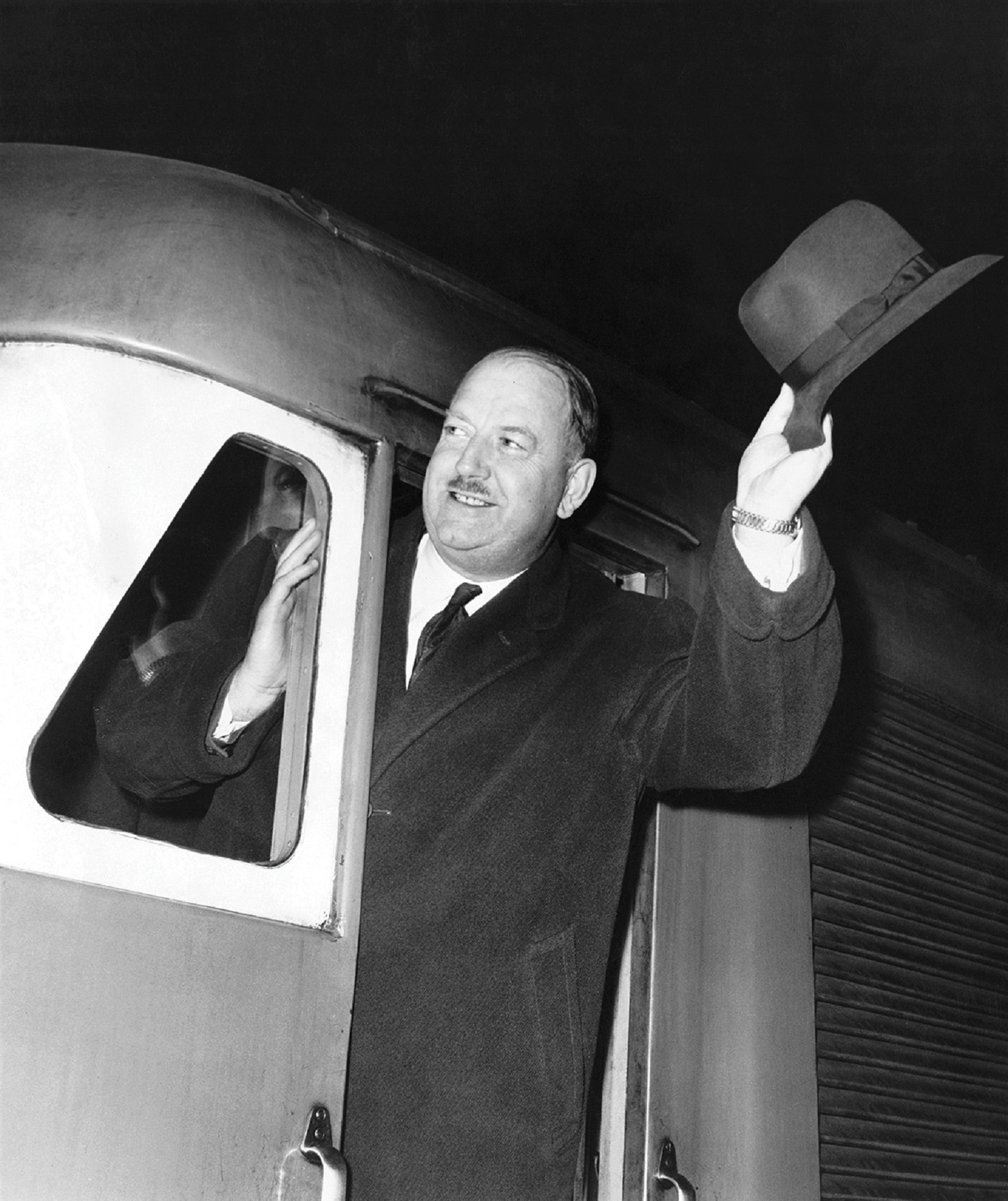
In 1961, Richard Beeching was appointed chairman of the British Transport Commission, and later the British Railways Board, where he remained until 1967.
His 1963 report, The Reshaping of British Railways, is most well known for closures of rail lines.
Although thousands of stations and miles of rail lines were closed during the wider rationalization period, the Great Central was unique.
This was not a rural branch line serving a few villages.
This was a main line into London.
The existence of the Great Central was increasingly seen as duplicate and unnecessary.
The argument was simple. London already had multiple routes to the Midlands and the North. Passenger traffic could be concentrated on those lines, giving British Rail the opportunity to remove an entire main line.
The Great Central local passenger services were withdrawn in March 1963, along with the freight services.
The railway was deliberately dismantled as a transport corridor even before the tracks were removed.
1966: The Main Line Is Severed
The Great Central became accessible only as a through line to London when the section between Aylesbury and Rugby closed in September 1966.
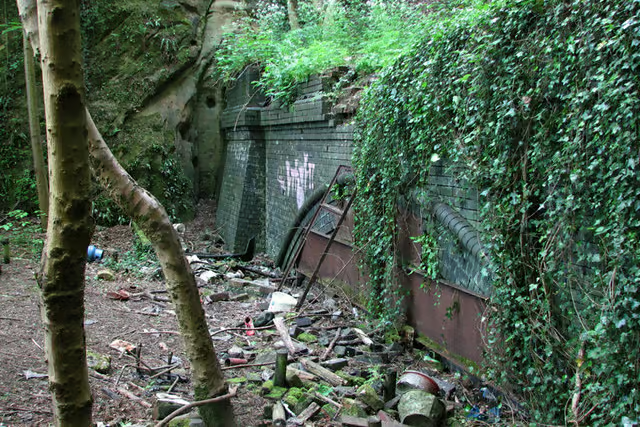
Further north, sections were lost, and the passenger service was shortened to operate between Rugby to Nottingham.
The railway that was left was but a small part of the network which opened with such enthusiasm in 1899.
With the closure of Nottingham Victoria in 1967, the remainder of the passenger service had to use Nottingham Arkwright Street.
The final passenger service from Rugby to Nottingham closed in May 1969.
After less than 70 years, Britain’s last Victorian main line had all but disappeared as a passenger railway.
Track was lifted, and stations were demolished and the land was sold or developed.
Nottingham Victoria largely disappeared beneath a shopping center. Leicester Central retained its track, but lost its services. Other stations became abandoned structures along an even more neglected trackbed.
Once those physical assets disappeared, reversing the decision became even more difficult.
Was Closing the Great Central a Mistake?
Here the history becomes a good deal more debatable.
It is difficult to define whether closing the Great Central line in the 1960s was a mistake by today’s passenger demands.
British Rail had the railway it had at that point in time.
Passenger numbers decreased dramatically from earlier years, and freight had shifted to the road.
The government required British Rail to become self-supporting.
The West Coast Main Line was being upgraded and electrified to provide an even more powerful connection between London and the Midlands.
Looking at it through that perspective, it may seem rational to concentrate traffic and investment.
However, infrastructure is built to last a lot longer than a political or financial cycle.
Reconstructing rail corridors through towns and cities after selling, demolishing, or covering them over would cost much more than maintenance would have. This shows that closing these corridors was short-sighted.
After British Rail’s passenger train services reached their peak in the early 1900s, a great expansion in rail travel occurred in the latter part of the century. By this time, the main lines had been built and rail corridor preservation had great monetary value, while new rail construction grew increasingly expensive and politically challenging.
The Great Central Railway could have provided additional main line capacity for trains and freight diversion, as well as other services, if it had been preserved in its entirety.
This could have happened with some additional construction.
However, with closures, alterations to alignments would have been needed to allow future construction of rail services.
The Great Central Railway’s alignment through urban areas could have safely retained value for future planners.
Marylebone’s Surprising Preservation
The Great Central story’s great irony is the preservation of Marylebone.
The terminus that once presented an awkward market entry for the railway came very close to obliteration.
With the quieting of the area by the early 1980s, closure studies were performed. It was proposed to redevelop the station and relocate services.
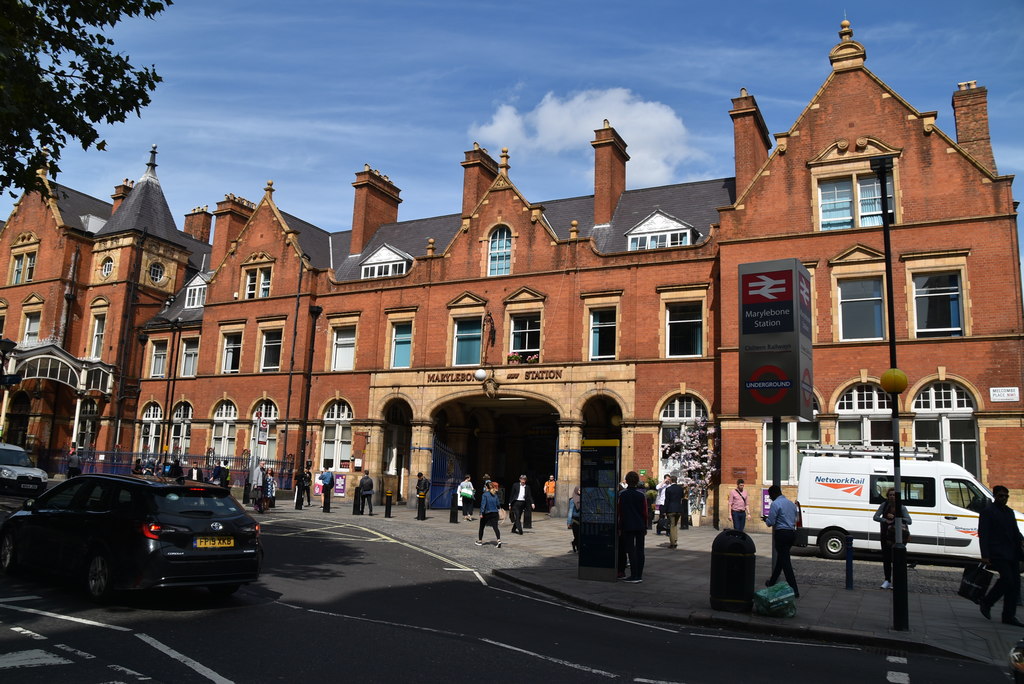
With the Chiltern Railways investment, services were improved between Marylebone and High Wycombe and Aylesbury, and newer services were created to other towns and as far as Birmingham.
Today, Marylebone has very busy commuter and long-distance services.
A London terminal once thought to be needlessly excessive is now used again.
This serves as an excellent small scale example of why declaring permanent rail redundancy as dangerous is accurate.
Demand is always changing.
Cities change.
Patterns of how we travel change.
Infrastructure that was an eyesore to one generation, may be crucial to the next.
The Great Central That Survived
The Great Central’s through main line may have ceased to exist, but the Great Central was never fully eliminated.
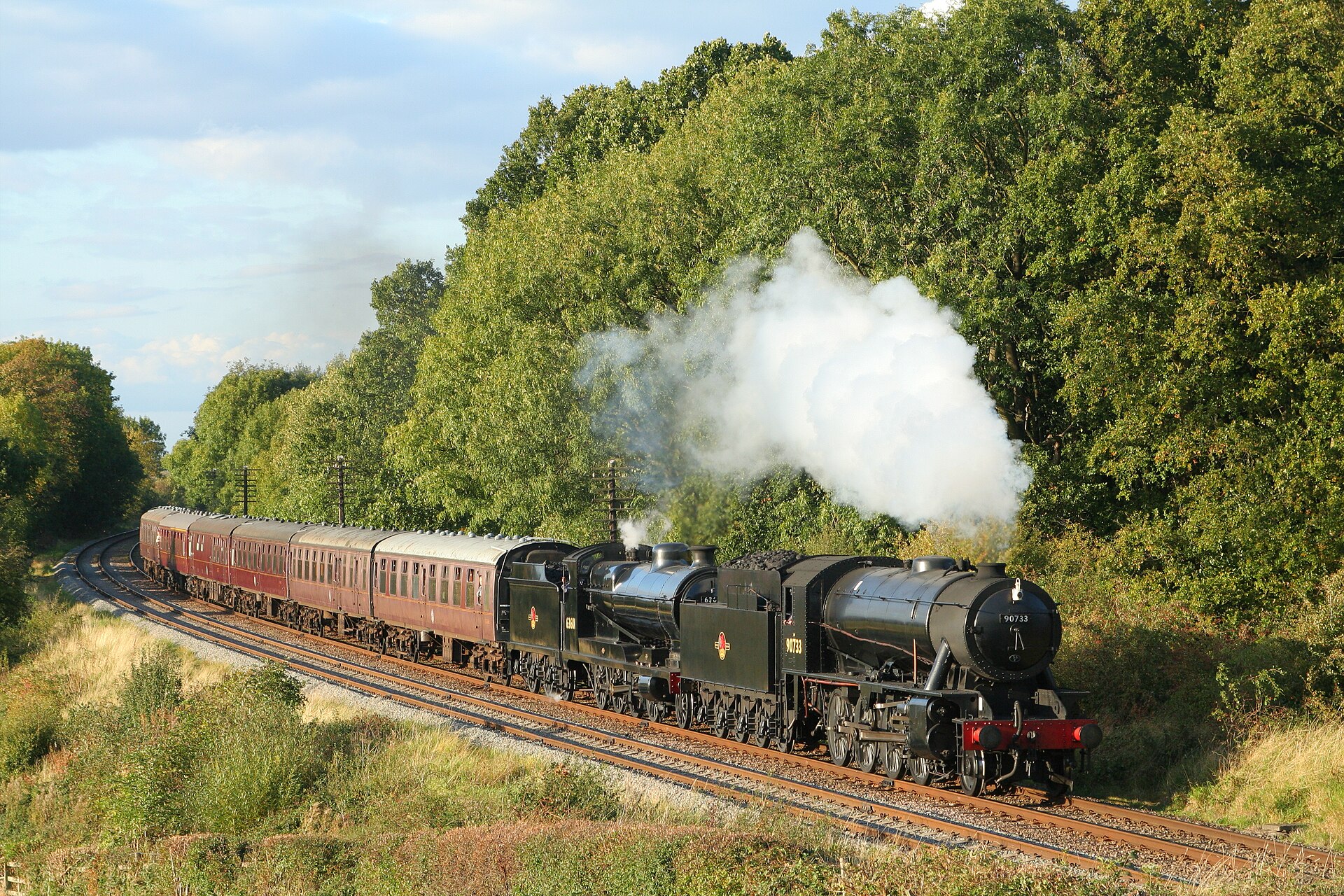
Part of the southern approaches was kept in use, while the main line carried freight beyond the end of the passenger service.
Most famously, the London Extension of the Great Central Railway was preserved.
These days the line centres on Loughborough. From there it extends to Leicester North as a double track main line, a mass difference from most preserved branch lines.
Up north, there is yet another preserved section from Ruddington.
Work has been itemized and done to connect the recommended preserved railways and form a potential 18 mile long preserved main line of the heritage route.
Hence, preservation has given part of the Great Central an extraordinary second life.
Stations that once had boarded up windows are now full of visitors in a steam or diesel train, where later generations can almost enjoy the main line.
HS2 and the Great Central
HS2 has made the Great Central their focus, as both of them deal with a large capacity railway corridor in the North/South line with a similar corridor in England.
This argument is appealing: Britain destroyed a high-speed rail project in the 1960s and then spent billions to create one decades later.
There’s more to the story.
The Great Central was designed to operate with the late 19th century technologies and the operational tools of that era. Conversely, HS2 is designed for a variety of speeds, structures, safety standards, and the engineering of modern-day capacity.
The canceled Great Central Railway was clearly not going to be the backbone of HS2.
However, there is a greater lesson here.
The rail transportation corridors have added strategic value and importance beyond what a particular service may provide.
Had the Great Central alignment been preserved with the ownership of a railway, there is a chance that some of those corridors could have been used to provide services to improve reliability, increase freight, and even add other infrastructure in the future.
Planners instead had to confront an immensely more challenging issue, the need to create new corridors of capacity in a nation that was much more built up than it had been in 1899.
For people forced to deal with overcrowded main lines and financially burdensome infrastructure projects, the removal of an entire north-south corridor of railways may seem foolish.
A full understanding is required for what happened.
Blaming the railways’ deterioration that occurred prior to the Beeching Report on Beeching himself is wrong. Likewise, closing a line during the period of rationalization does not make the closure senseless.
The Great Central is a case study that illustrates how difficult a task developing a railway system can be.
Railways are indeed built for future generations, but the decisions concerning them are often expedient.
The Victorian builders of the Great Central could not forsee what Britain’s needs would be like in the 1960s.
Those who demolished it could not foresee the railway reconstruction that would occur in the last part of the 20th Century and the beginning of the 21st Century.
Over 125 years after the London Extension was built, the Great Central continues to dominate railway discourse in Britain.
While the trains may have ceased to run on both Leicester Central and Rugby Central, and Nottingham Victoria may have been demolished, still much of the once proud route remains as abandoned earthworks, footpaths, roads and fragments of the line to be found on the landscape.
There are sections of the route that were preserved, and the trains have been brought back to part of the disused route, and the debate about whether Britain should have ever closed the main line continues.
This may be the Great Central Main Line’s lasting legacy: a debate about whether Britain should ever have closed it.
It was envisioned as a railway for the future, however, struggled to keep its spot in the present, and subsequently, was taken apart because Britain believed it no longer had any use for it.
History, however, has proven that to be highly unlikely.
Want to learn about the various rolling stock around the UK click here. Fancy a ride on the last remaining section of the GCML click here.


