
The Class 170 Turbostar is one of the most successful diesel trains to operate across Britain. Since entering service in late 1990s, Turbostars have worked across the nation from cross-national routes, to regional services in Scotland, Wales, the Midlands, and England.
Turbostars were manufactured by ADtranz and Bombardier at their Litchurch Lane Works. ADtranz was an improvement on many of the 1980s multiple diesel units. ADtranz wasR developed with speed and ventilation systems and designed for longer journeys.
More than 25 years after their introduction, Class 170s are still vital to rail services in Britain.
From Networkers to the Turbostar
The Class 170 is part of Bombardiers’ Turbostar family, comprising Classes 168, 171, and 172.
Their origins can be traced back to the Class 168 units built for Chiltern Railways in the 1990s. The design was a new platform for diesel multiple units (DMUs) built to serve the new, privatized, passenger rail service in the UK.
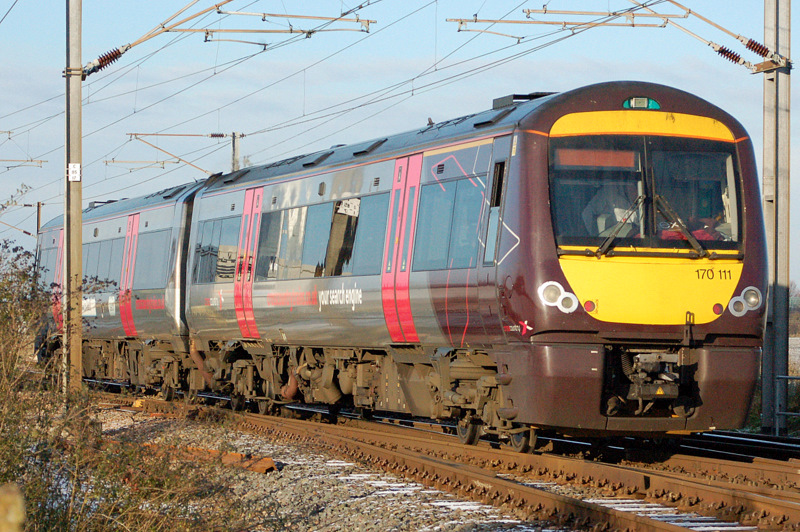
The first Class 170s were manufactured in 1998, with production ending in 2005.
Unlike other rail vehicles, the Turbostar platform was modular. As a result, various orders of Class 170s and different configurations were built.
Most were built as two or three-car units. This meant that operators could have DMUs that they could use to fulfill demand for passenger services while retaining the ability to couple together multiple-units when demand required it.
The Class 170 was one of the more successful regional DMU designs of the period following the end of British Rail.
Class 170 Technical Specifications
Manufacturer: ADtranz / Bombardier Transportation
Built: 1998-2005
Factory: Derby Litchurch Lane Works
Family: Turbostar
Traction: Diesel multiple unit
Formation: Two or three cars
Maximum speed: 100 mph
Transmission: Hydraulic
Engine: MTU diesel engines
Body construction: Aluminium alloy
Coupling: BSI automatic coupling
Number built: 139 units
The Class 170 has a 100mph maximum speed.
This speed allows the Class 170 to run alongside most modern passenger services on main lines without requiring separate services to run at a lower speed to accommodate it.
Many earlier Regional Diesel Multiple Units were limited to 75 or 90 mph.
Each of the vehicles has underfloor diesel engines, meaning that for the majority of its journey, the Class 170 can accelerate quickly to a speed suitable for urban services, while retaining performance for main line running.
Designed for Regional Rail
The Class 170 is in between a standard commuter DMU and an intercity train.
This helps define its roles.
Its design benefits from air conditioning as well as longer section seating and internal layouts appropriate for longer distances and journeys of greater duration than standard suburban services.
Throughout the years, different operators have fitted their fleets with different seating layouts and different passenger facilities. Refurbishments have provided different amenities such as power outlets, Wi-Fi, better passenger information systems, and interiors.
Being able to accommodate these amenities has proved to be very useful, even in trains that are three decades old.
Even while the passenger expectations in 1998 were very much different than they are today, trains of this nature have been able to adapt and meet these expectations to a great extent.
A Train Seen Across Britain
The Class 170 may have lacked some amenities, but it was a considerable step up from what many of the trains it replaced offered for regional travel.
The Class 170 has a very interesting story, and it is mainly because of how much the fleet of Class 170’s has traveled.
Operators such as ScotRail, Central Trains, Midland Mainline, South West Trains, Hull Trains, and many others, have all employed Turbostars at some point.
Of all the operators, Central Trains may have had the most of them. The reason was likely because as a regional operator they had the best use for the Class 170s.
After the end of the Central Trains Franchise in 2007, their fleet was divided and a trend of Class 170s being moved around the UK with each new Franchise began.
After this, CrossCountry became a major operator, using them on regional services to and from Birmingham to Cardiff and Nottingham.
ScotRail also used Class 170s extensively, and they became household travelers around Scotland.
Other units used to be associated with operators, but as newer trains came to replace them, they got assigned to other operators instead of being retired. The Class 170 units were still in good working order, relatively young, and could be used in other areas.
This resulted in a varied career for the Class 170.
The Class 171 Connection
The Class 171 connects to the Class 170 through Southern’s requirement for diesel units to operate on unelectrified stretches of rail such as the Uckfield Line and the rail services between Ashford International and Eastbourne.
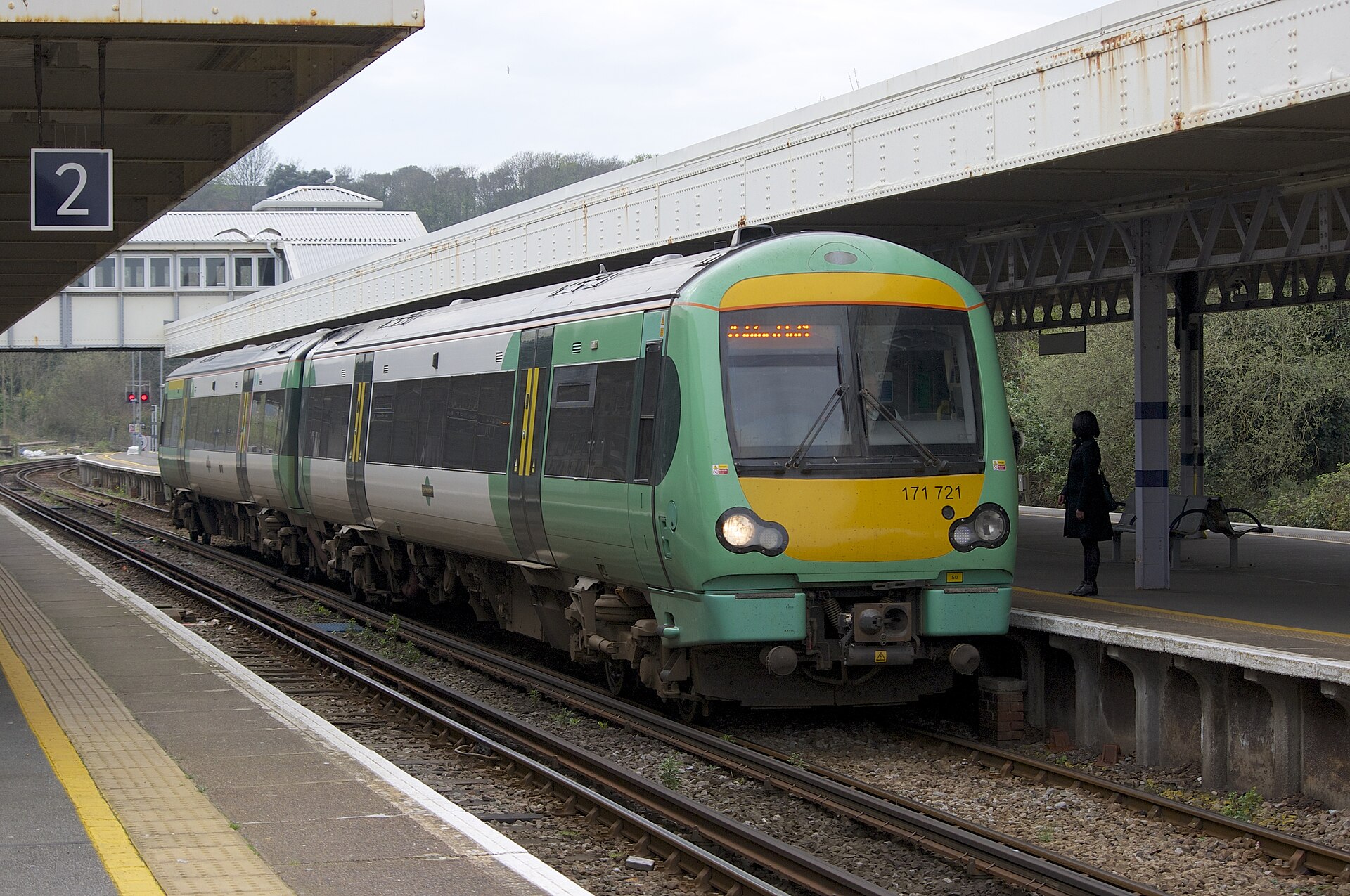
The Class 170 units would work for what Southern needed, but there was an issue.
The Class 170 units used BSI couplers, and while Southern’s EMU (Electric Multiple Unit) fleet used Dellner Couplers, the units allocated for Southern were modified to have Dellner Couplers, and classified as Class 171s.
Mechanically, the classes are related, but visually, the Class 171s are modified Class 170s.
This highlights the flexibility of the Turbostar platform, as the base version could be modified to fulfill the operational needs of many railways.
Life Inside a Turbostar
The Class 170s introduced many features on regional trains that would later become commonplace. Improved air-conditioning was a big deal on the Class 170 as it helped improve the experience for many passengers on the British Rail regional trains. Improved seating with higher comfort levels and large windows added to the experiences on the trains.
Still, there’s a big difference in passenger experiences.
Given the variety of operators and refurbishment programs that have occurred over the last twenty years or so, there is no longer a standard Class 170 interior. Seating plans, desk configurations, seating, luggage accommodations, power outlets, and finishes vary by the operator that owns or leases the train.
The trains have had many of the problems other regional trains encountered, including capacity issues. A two or three-car Turbostar can get crowded very quickly if the service gets busy. Trains that were considered adequate for a particular route got overcrowded as demand started to grow on some of these routes.
This also may not mean the trains themselves were inadequate. It is possible the considerable growth that has occurred on Britain’s regional railway since the Class 170s were ordered may be the real reason for this overcrowding.
Reliability and Longevity
The continued extensive use of the Class 170 shows the design was successful.
The Turbostar was designed to quickly fulfill a large order for modern diesel trains, and, as a result, the design was flexible, allowing multiple operators to use similar but not the same trains on various routes.
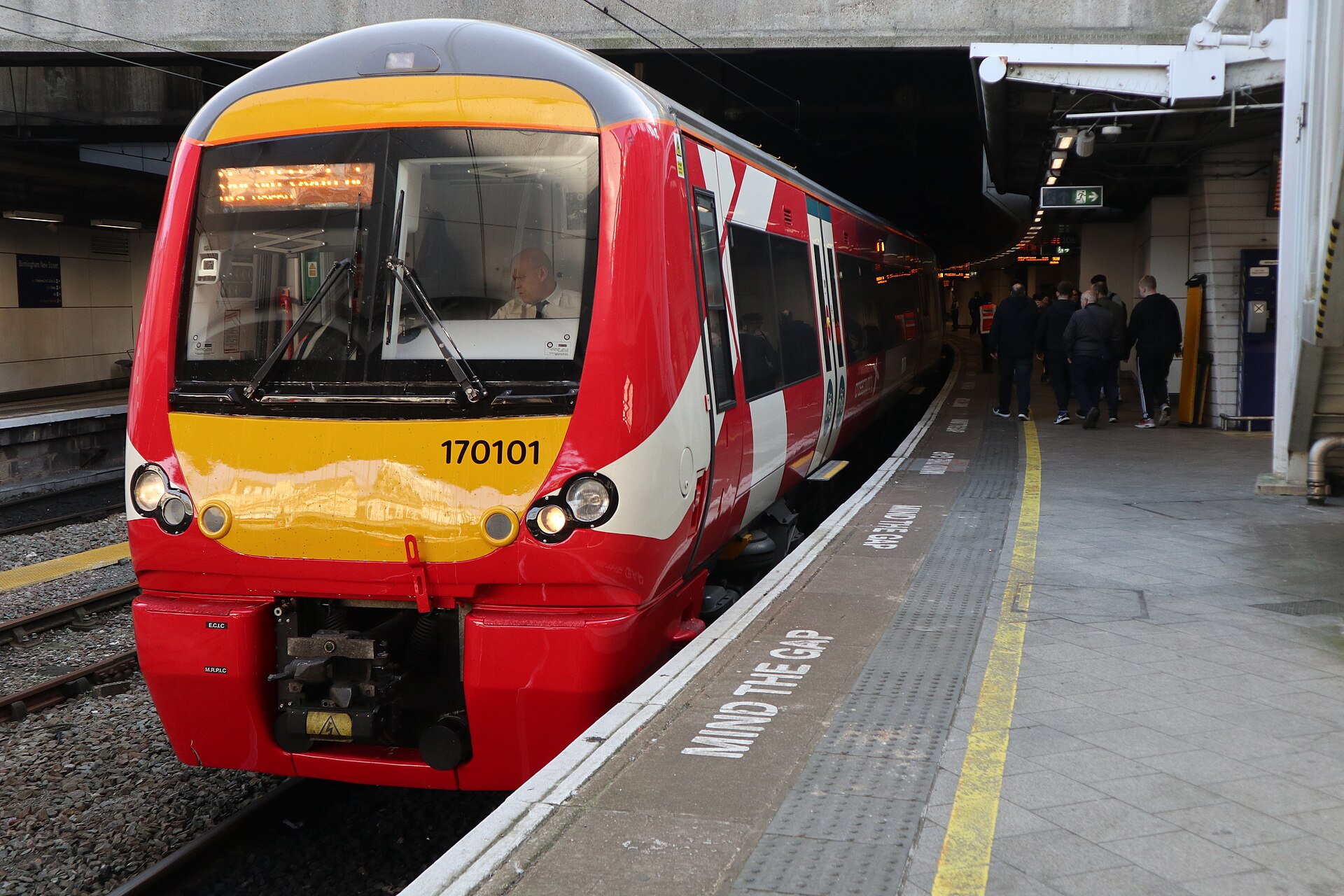
The train’s ability to go 100 mph and the fact that the passenger interiors have been refurbished continued to make the trains relevant and kept them in service for another productive spell.
There were reliability problems and the technology had to be updated, as with any equipment with more than 25 years of service, but the fleet demonstrated an impressive amount of service life.
The most important thing is that the Class 170s remain relevant for the transportation services they offer.
With performance limits, accessibility, and passenger expectations becoming issues with older material, rolling stock is becoming a challenge to accommodate on modern railways. The adaptability of the design of the Turbostar has prevented it from becoming obsolete with the advent of newer rail designs.
A Changing Railway
With the Class 170, the primary concern has shifted from the functionality of the design to the length of time diesel-only regional trains will remain a part of the British railway.
Decarbonization affects almost all diesel fleets, and it will significantly affect the Class 170.
Further electrification will make it unnecessary to have diesel trains on certain routes, but battery-electric or bi-mode technologies will likely make them obsolete on the rest of the partially electrified routes.
The Class 170 will not become obsolete just yet either.
There is a lot of unelectrified railroads in Great Britain, and it is a big expense to replace a large serviceable railway. It can, meanwhile, replace older diesel trains, as newer trains are being installed elsewhere.
This may extend the Class 170 legacy.
The Turbostar Legacy
Although the Class 170 may not be as popular as the InterCity 125, Class 91 or Azuma trains, its legacy is large.
When Great Britain’s trains started to be privatized, the Class 170 was one of the first trains to provide regional services when there was a need to replace old, outdated stock.
It built its reputation on versatility.
One train could have accommodated all three demands for different journeys: short and regional, longer cross-country, and services for highly congested corridors. As needs changed, units would be refurbished to be reused at a different location.
Over 25 years after the first examples of the Class 170 were constructed at Derby, passengers would still come across these trains fulfilling their original purpose of connecting towns and cities located in the British local and intercity networks.
Like all rolling stock, these trains will have to end their service with the arrival of the next generation of technology.
For the time being though, the Turbostar remains a reliable fixture of the British rail landscape, and has probably been the high point of regional train design in recent years.
Want to learn more about about UK rolling stock click here. Don’t forget to give us a like on Facebook by clicking here.


